Weight and Law of Basque Coins

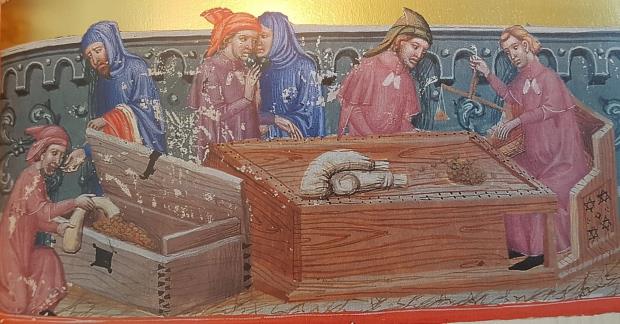
Ferrer Bassa i taller. Escena de pesatge de monedes d’or amb un trabuquet o balança de plats triangulars. Salteri anglo-català de París, avui a la Biblioteca Nacional de França, 1333-1348. Fotografia del facsímil de l’obra editat per Moleiro editors. Biblioteca Joaquim Folch i Torres del Museu Nacional.

Among the objects presented by the Basque Museum of Bayonne are five standard weights from this city. These weights were placed in the town hall in 1788 with the intention of being used as standard weights. They have a cylindrical shape and are pierced at the top by a hole through which a movable ring can be placed. The faces of the cylinder depict the image of the coat of arms of the city of Bayonne. The weights kept in the Basque Museum of Bayonne […]

Weight and Law of Basque Coins Read More »
A look at the Bayonne Mint – Part 2, Presses at work

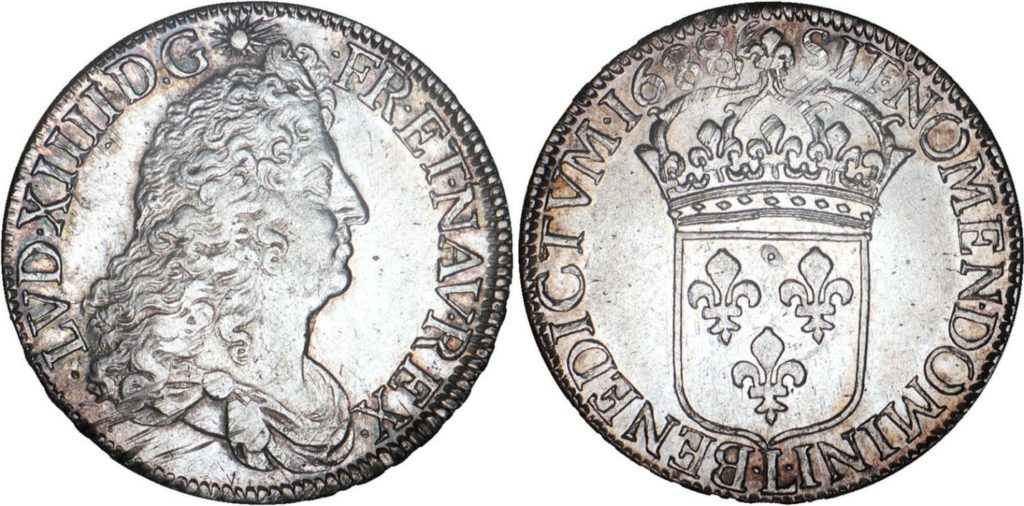
In the 1640s, a new coinage reform took place in the Kingdom of France. As part of this reform, new types of coins were created, with new weights and values. But in addition, the hammered coinage was banned and the coinage by the flywheel press, promoted by Jean Varin (or Warin), was made mandatory throughout the kingdom. The aim, once again, was to improve the quality of the coins and, as a result,

A look at the Bayonne Mint – Part 2, Presses at work Read More »

A look at the Bayonne Mint – Part 1, Hammer by hammer

The most prolific and prosperous mint in the current Basque territories was the mint of Bayonne. During the 16th and 17th centuries, while the importance and richness of the coinage of the Kingdom of Navarre declined (both in Upper Navarre and Lower Navarre), Bayonne became one of the most important mints in France. However, since the coins of Bayonne were minted under the authority and in the name of the French kings, the Navarrese mint

A look at the Bayonne Mint – Part 1, Hammer by hammer Read More »

Berdabio, the Bertsolari Counterfeiter of Navarre

Atsegin dut Podcast-ak entzutea. Normalean historiaren eta historioen ingurukoak entzuten ditut. Euskarazko podcast-en artean, Kirmen Uriberen New Yorkeko Munduak, Paperezko Itsasoa, La Biblioteca Perdida-ren Iraganeko Kronikak eta Zuzeu Podcast-en Euskal Gaizkileak saioak entzuten ditut maiz. Ain zuzen ere, duela aste batzuk Euskal Gaizkileak saioaren „Berdabioko Atea“ emanaldia entzuten ibili nintzen. Eta zer arraio, historio honetan

Berdabio, the Bertsolari Counterfeiter of Navarre Read More »

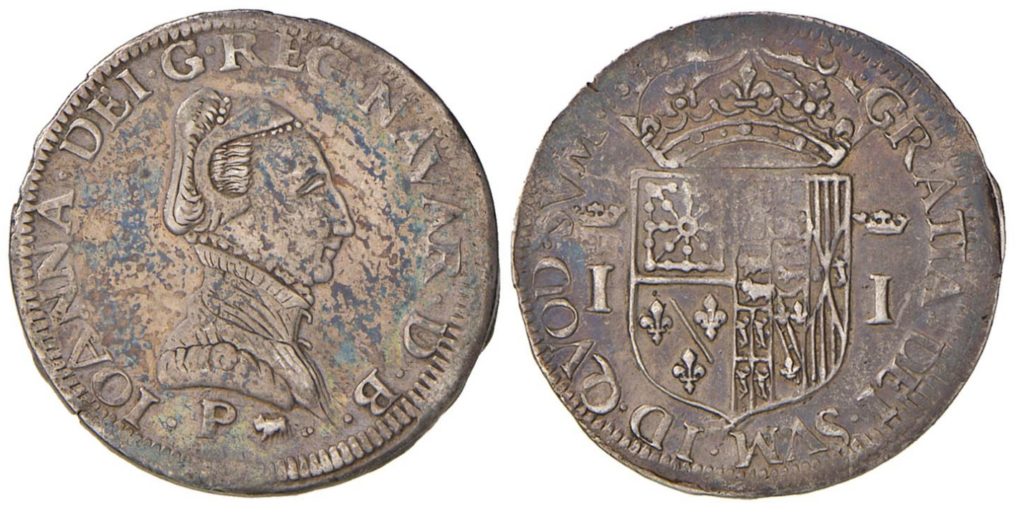
Queen Joanne's Pau Testons

Reign: Joan III. Queen of Navarre, Joan I. Lady of Béarn Type: Teston Year: 1566 Mint: Pau Mint Edge: Irregular Edge Engraving: ————– Metal: Silver (about 898 thousandths) Diameter: 28 mm Weight: 9.41 gr Quantity: 292,320 testons and half testons between 1564 and 1566 Mintage: Pressed by flywheel, silver rolled by mill Mintmaster: Étienne Bergeron (Land of the Moon)

Queen Joanne's Pau Testons Read More »

Navarre Shall Be the Wonder of the World

“Navarre shall be the wonder of the world”… these words were uttered by the English writer Shakespeare in the play “Love's Lavour's Lost” to King Ferdinand of Navarre. Shakespeare wrote this play in the mid-1590s, and although he named the king of Navarre Ferdinand, the Navarre mentioned in it is the Navarre of Henry III, consisting of Lower Navarre and Bearn, around the end of the 16th century.

Navarre Shall Be the Wonder of the World Read More »

When Spanish Language Appeared on Basque coins

As we saw in the previous entry (link), the French Revolution brought about a complete change in the patterns of coins in the North. But what was happening in the South at the same time? Well, at the time of the revolution in France, the kingdom of Spain was still rooted in the old regime. Through the use of Latin, the coinage indicated that the king's power had a divine origin. Several kings passed, but

When Spanish Language Appeared on Basque coins Read More »

When French Language appeared on Basque coins

As we saw in the previous entry (link), the French Revolution brought about a complete change in European political thought. This change took place throughout the 19th century in different European territories, where the creation and expansion of the nation-state occurred as the century passed. At the same time that the old regime was fading away, new nation-states began to build the foundations of their symbols, myths and structures.

When French Language appeared on Basque coins Read More »

The Restruck 10 reales of Ferdinand VII

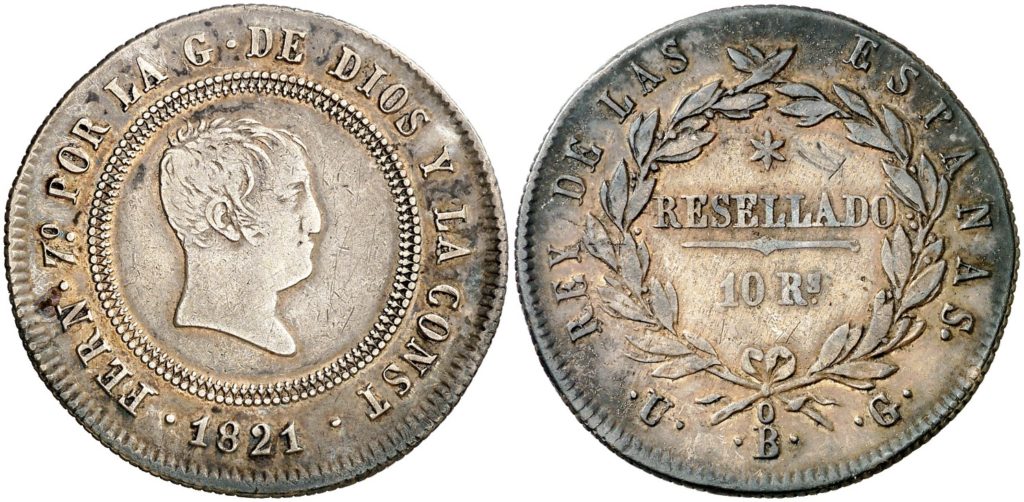
Reign: Ferdinand VII of Spain, Ferdinand III of Navarre. Liberal Triennial Type: 10 Reales Reissued Year: The year 1821 is indicated on the coin, between January and June 1822 Mint: Provisional Mint of Bilbao Edge: Fluted Edge Engraving: ————– Metal: Silver (about 917 thousandths, law of 11 coins) Diameter: 34 mm Weight: 13.10 gr Mintage: By wheel press Mintmaster: Manuel Domingo

The Restruck 10 reales of Ferdinand VII Read More »